

By: Chinedu Jude Nnaji
My Background and Postgraduate Applications
Coming from a disadvantaged background, both financially and academically, pursuing a dream of becoming an astrophysicist once felt unrealistic. It was a dream I could hardly share with anyone. Even when I did, it often made little sense to those around me. Explaining such a dream to an uneducated mother was even more difficult. Yet she would proudly say, “My son is in the university”, even though she could neither pronounce nor explain what I was studying.
Deep inside me was a strong desire to do something unique, something novel, something uncommon and beyond the ordinary. My mother saw that determination and believed in it wholeheartedly. She supported my dream blindly, with everything she had.
I completed my BSc (Honours) degree in Physics and Astronomy at the University of Nigeria (UNN) in 2020/2021, under the supervision of Prof. Finbarr Odo. Shortly after completing my undergraduate studies, I lost my mother to kidney disease. Life became even more difficult and uncertain. During this period, I applied to several universities abroad, hoping for an opportunity to further my education. Unfortunately, these applications were unsuccessful.
Still holding on to hope, I applied to the Pan-African Planetary Space Science Network (PAPSSN) mobility scheme. This time, something felt different. I was encouraged by the positive and supportive feedback I received while communicating with my then potential supervisor, Prof. Nukri Komin, at the University of the Witwatersrand (Wits), South Africa. That optimism kept the dream alive.
PAPSSN Nomination
The PAPSSN nomination arrived during my National Youth Service (NYSC) year in 2022, while I was still teaching in a rural area in Ipokia, Ogun State, Nigeria. Receiving the official nomination letter for the PAPSSN mobility scholarship was one of the happiest moments of my life. Words cannot fully describe the joy and gratitude I felt at that time.
It was my first time travelling far from home and my first time boarding an aircraft. I felt a mixture of excitement, fear, and overwhelming gratitude. Preparing for the journey was one of the most challenging parts of the mobility experience for me, but it also marked the beginning of a life-changing opportunity for which I remain deeply thankful.
Arrival in South Africa – Johannesburg
My first flight was booked for 7 June 2023 by the PAPSSN team. Nervous yet excited, I enjoyed the experience more than I had imagined. I arrived at OR Tambo International Airport and made my way to the University of the Witwatersrand in Braamfontein, where temporary accommodation had been arranged for me.
South Africa immediately revealed itself as a beautiful and diverse country, rich in culture, history, and natural resources. Johannesburg, often referred to as the City of Gold, reflects the nation’s deep mining heritage and its strong international ties. Wits University stood out as a large, vibrant, and globally connected institution, with an academic atmosphere that felt both serious and welcoming.
Waking up in a new country brought many changes: new faces, languages, customs, and academic expectations. The cultural adjustment was real, from the cold winter mornings (including a rare snowfall) to the lively music, dance, traditional attire, and conversations about customs such as marriage and lobola. I also found that people were especially warm and welcoming, even more so when one made the effort to understand or speak a local language. Settling in was not easy, but with time, patience, and openness, I adapted and began to feel at home.
The Wits School of Physics
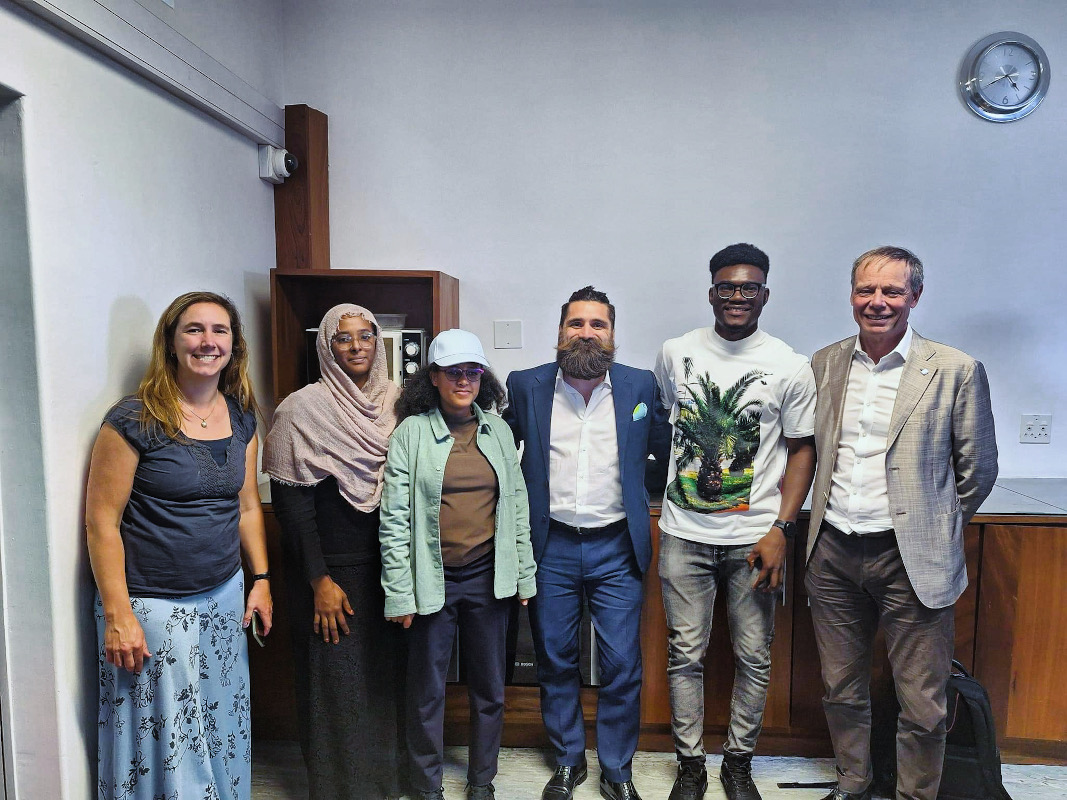
Registration as an international student initially made me worry about how my stay would unfold. Contrary to my fears, I settled in well, and having a supportive and dedicated supervisor made the transition smoother.
I began my MSc research in High Energy Physics under the supervision of Prof. Nukri Komin. My project was titled “Search for High-Energy Gamma-Ray Emission from the Supernova Remnant SN 1987A with H.E.S.S.” The research involved analyzing data from the High Energy Stereoscopic System (H.E.S.S.) under the H.E.S.S. Collaboration.
Throughout this period, I gained valuable skills in programming, data analysis, gamma-ray astronomy, and observational astrophysics. I also served as a Teaching Assistant (TA), where I tutored and also supported undergraduate laboratory sessions. This experience allowed me to demonstrate and perform numerous physics experiments, strengthening my teaching, communication, and mentorship skills. These experiences contributed greatly to my academic and personal growth.
The Wits School of Physics provides a supportive and stimulating research environment. Access to computational resources, servers, office spaces, and a collaborative academic culture encouraged productivity, innovation, and scientific growth.
Conferences, Workshops, and Summer Schools
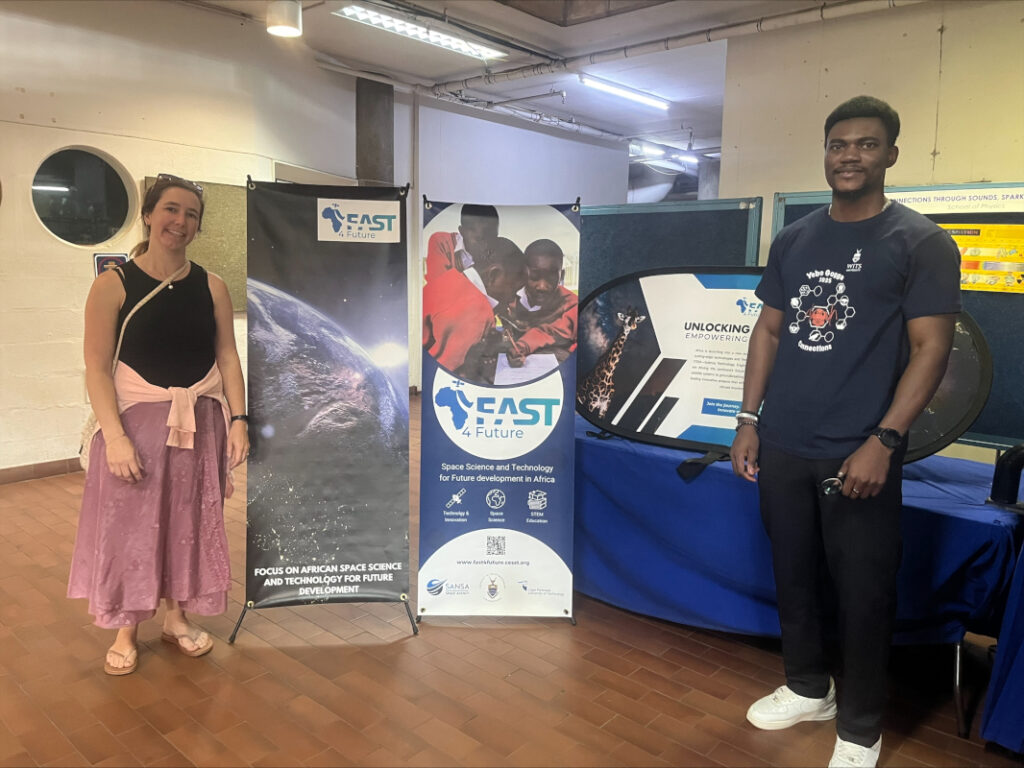
PAPSSN placed me in an excellent position to explore the broader scientific community. I made full use of this opportunity by attending conferences, workshops, and summer schools, with additional travel support from the South African Gamma-Ray Astronomy Programme (SA-GAMMA).
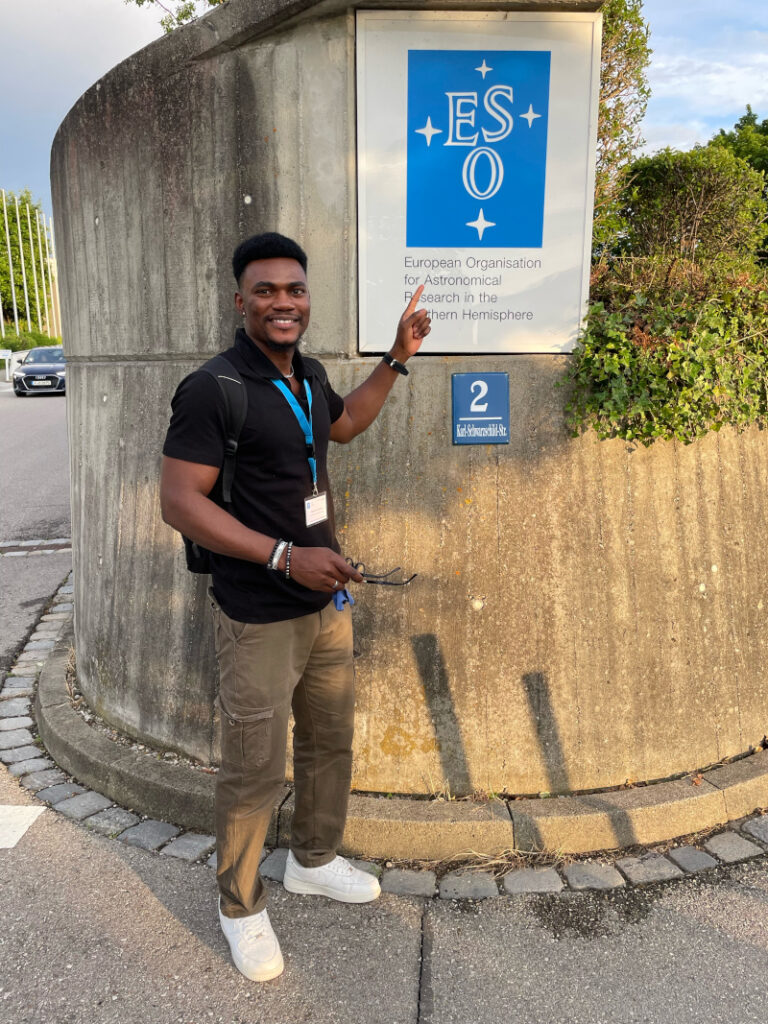
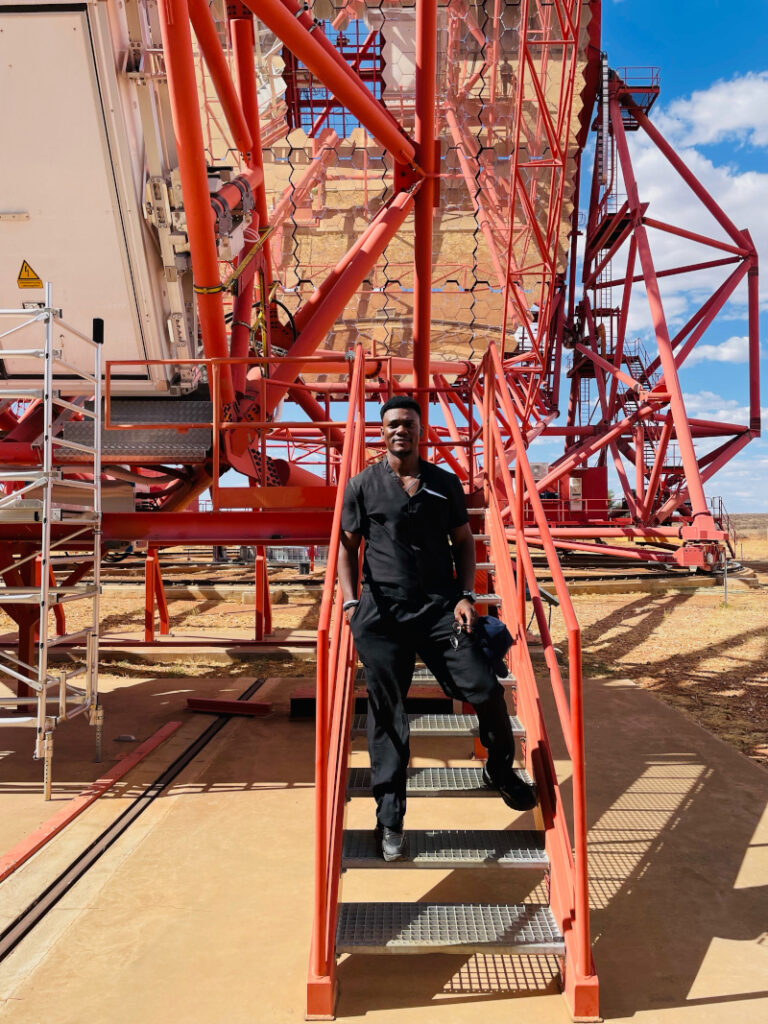
I visited the H.E.S.S. telescopes in Namibia and participated in a H.E.S.S. data analysis workshop hosted by the Namibia group. Within South Africa, I attended HEASA and AfAS conferences. Internationally, I travelled to Germany, with a beautiful stopover in Dubai UAE, to attend the ESO-Gruber Summer School in Garching, hosted by the European Southern Observatory.
These experiences allowed me to learn from leading scientists in astrophysics and to engage with researchers from around the world. They remain some of the most inspiring moments of my academic journey.
Degree Award and Graduation
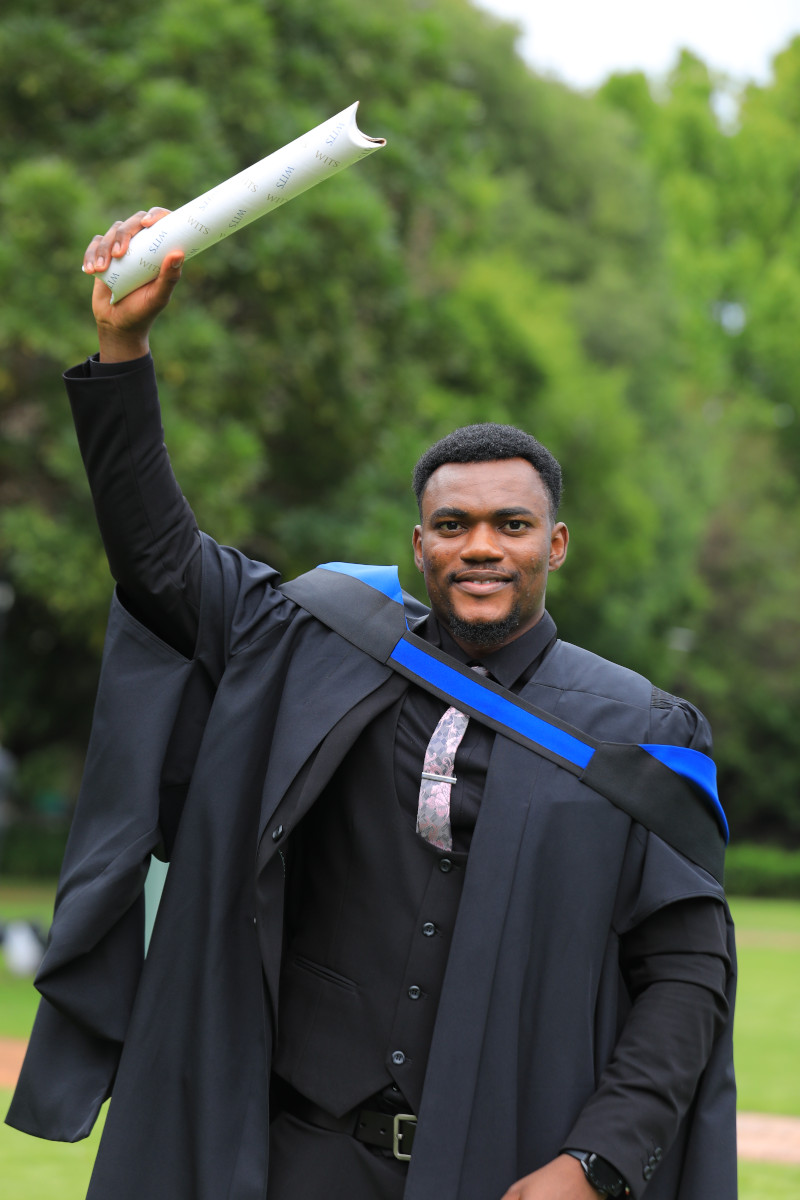
By the end of my mobility period in May 2025, I successfully completed my research and dissertation. After examinations and administrative processes, I officially graduated with an MSc in Physics at the University of the Witwatersrand during the graduation ceremony held on 9 December 2025.
This milestone represents more than a degree. It reflects resilience, persistence, and the power of opportunity. Today, I move forward with a renewed determination to pursue a PhD and contribute meaningfully to astrophysics research.
None of this would have been possible without the PAPSSN mobility scholarship. I remain profoundly grateful for this opportunity. PAPSSN did not only support my education, it transformed my life and reaffirmed my belief that dreams, no matter how distant they seem, are achievable with the right support.
Thank you, PAPSSN.